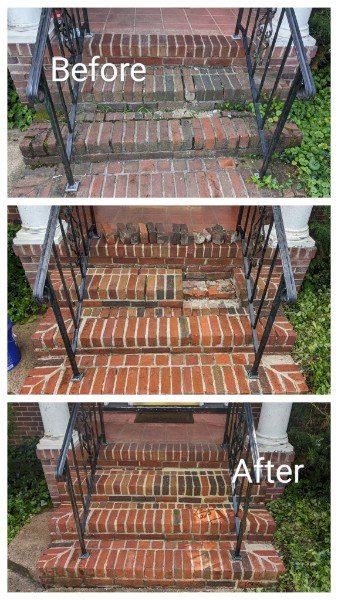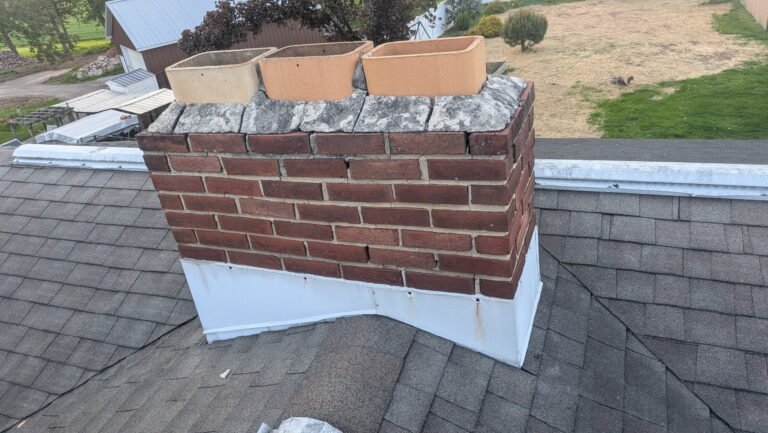
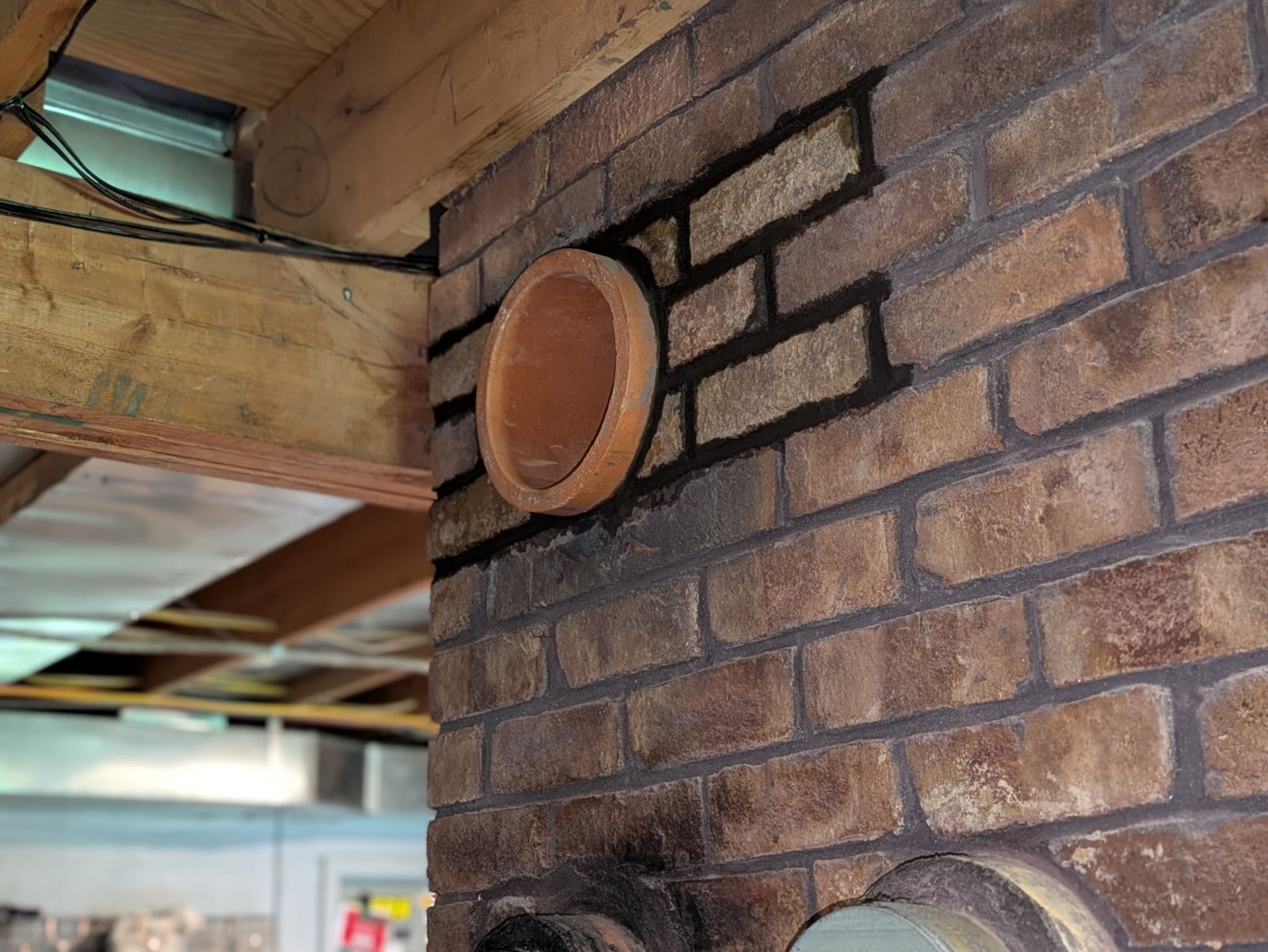

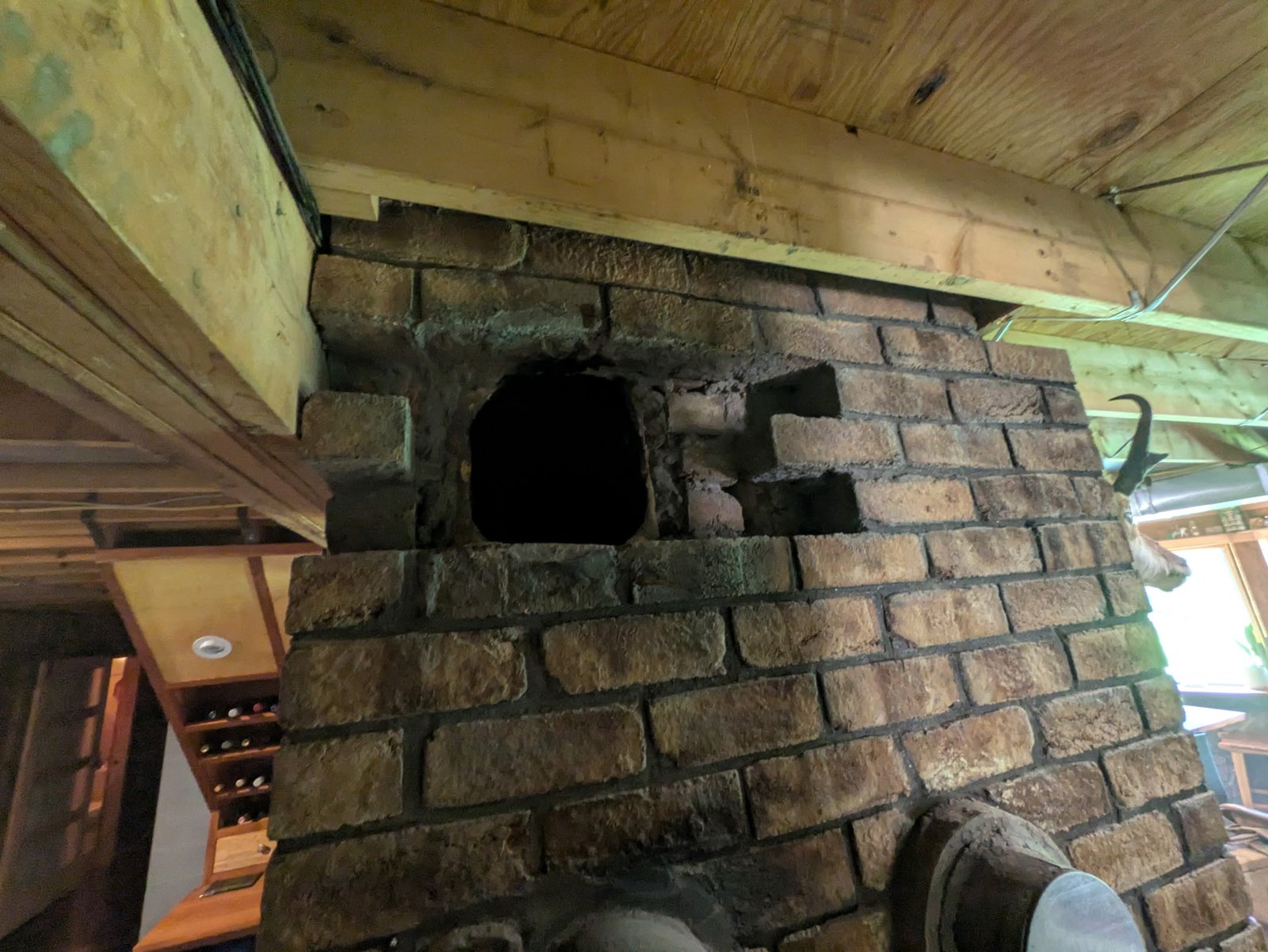
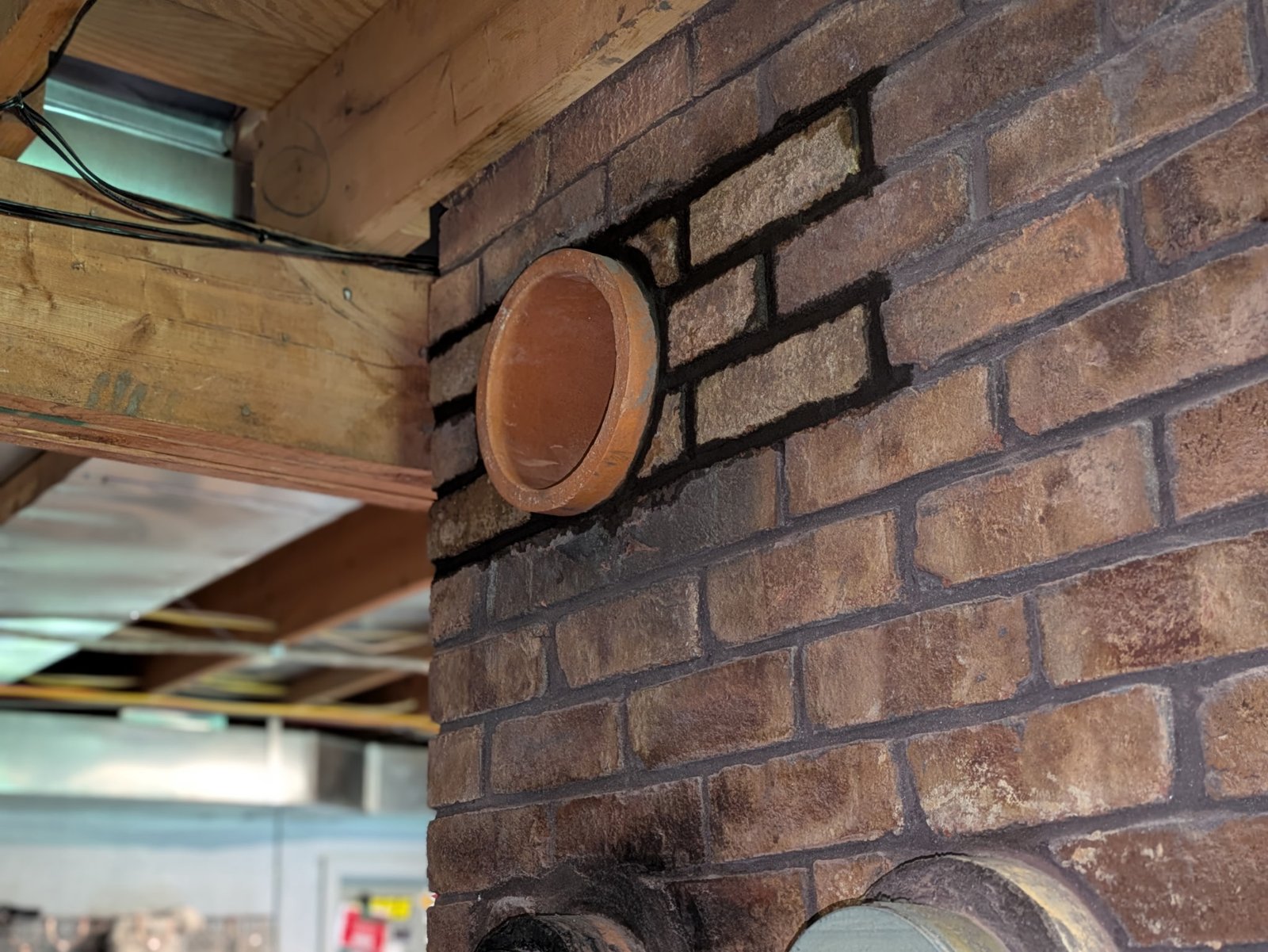
Before and after: deteriorated vent opening replaced with new terracotta flue liner and integrated brick infill, York County PA.
L
LBE Masonry Team
Licensed Masonry Contractors, York County PA
Some masonry problems are not about strength or safety. They are about living with something ugly every time you walk past it. This project was that kind of fix, and it is one of our favorite types of work to do.
The homeowner did not call us because the wall was failing. They called because every time they walked past this spot, they saw a dark, ragged hole where a terracotta vent used to sit, surrounded by mismatched brick that did not belong to the rest of the wall.
This is a less common request than retaining walls or chimney repair, but it comes up more often than people expect, especially in older homes throughout York County. An old vent opening, terracotta vent liner or flue tile gets damaged, removed or simply outlives its purpose. What is left behind is an awkward gap surrounded by brick that someone patched at some point with whatever was on hand. The result rarely matches and almost never looks intentional.
That is exactly what we found here. The opening had clearly been altered over the years. Part of the original terracotta liner was still in place but cracked and pulled away from the surrounding brick. Around it, mismatched brick fragments had been wedged in at some point as a partial fix, leaving an irregular dark void that drew the eye every time you looked at that wall.
It was not dangerous. It was just wrong. The kind of detail that bothers you more the longer you live with it.
That is usually when we get the call.Honest observation: This is the kind of project where the homeowner apologizes for “such a small job” right before describing how much it has bothered them for years. We have learned that the size of the repair and the size of the relief once it is fixed are not related at all.
What We Did
This was a precise, detail-driven repair rather than a large-scale rebuild. The scope was small in square footage but required real care to get right, since the entire goal was for the finished wall to look like nothing had ever been wrong with it.
01
Removal of Damaged Materials
The cracked terracotta fragments and the mismatched brick pieces surrounding the opening were carefully removed. This had to be done without disturbing the sound brick around the perimeter, which meant working slowly and checking the surrounding mortar as we went.
02
New Terracotta Flue Liner Installed
A new terracotta liner was set into the opening to preserve the original character and function of the vent. Even though this particular opening was no longer in active use, replacing it with proper terracotta rather than simply filling the hole keeps the structure consistent with how it was originally built.
03
Brick Infill Matched to Existing Pattern
The brick around the new liner was rebuilt to match the coursing, color and joint width of the surrounding wall. This is the step that determines whether a repair like this disappears into the wall or stands out as an obvious patch. We took the time to select brick that matched in tone and texture, not just in size.
04
Mortar Joint Integration
New mortar joints were tooled to match the depth, width and color of the existing joints throughout the wall. On a small infill repair like this, joint consistency is what makes the difference between a visible patch and a seamless transition.
Verified Google Review
★★★★★
I had been looking at that ugly hole in my wall for years and just assumed nobody would want to take on such a small project. LBE came out, understood exactly what I wanted, and the repair is honestly seamless. You cannot tell anything was ever wrong there. I wish I had called years sooner.
What Is a Terracotta Vent Opening and Why Do They Fail?
Terracotta vent liners and flue tiles were standard construction material in older homes throughout Pennsylvania, used for everything from chimney flues to smaller ventilation openings in masonry walls. The material is fired clay, similar to brick, shaped into a tube or liner that resists heat and moisture better than the surrounding masonry alone.
Over decades, terracotta can crack from thermal cycling, physical impact or simple age. When a vent is no longer needed, homeowners or previous contractors sometimes remove the liner and attempt to fill the opening with whatever brick or mortar is on hand. Done carelessly, this creates exactly the kind of mismatched patch we found on this wall: brick that does not align with the coursing, mortar that does not match in color, and an opening that never quite gets sealed cleanly.
Material consistency matters: The Brick Industry Association notes that infill repairs on historic or older masonry should match the original material properties as closely as possible, including absorption rate and thermal expansion characteristics. Using terracotta to replace terracotta, rather than substituting concrete block or mismatched brick, keeps the wall behaving consistently and prevents new cracking at the repair boundary.
Why Brick Infill Work Is Harder Than It Looks
Patching a hole in a brick wall sounds simple. Getting it to disappear is not. There are a few specific challenges that make infill repairs like this one more demanding than they appear from the outside.
When This Type of Repair Makes Sense
This kind of targeted infill repair comes up in a handful of common situations across York County homes.
Before you fill any vent opening: Confirm the opening is not still serving an active function, such as combustion air for a furnace or water heater. Sealing an active vent opening can create a safety hazard. On this project, we confirmed with the homeowner that the original vent was no longer connected to any active appliance before proceeding with the terracotta liner replacement.
Specialty Brick Restoration Across York County
Not every masonry problem is a big structural project. We do detailed infill repairs, terracotta vent restoration, mismatched brick correction and small-scale restoration work throughout York County and Adams County. If there is a spot on your home that has bothered you for years, even if it seems too small to call about, send us a photo.
📍 York, PA
📍 Shrewsbury
📍 Glen Rock
📍 Hanover
📍 Spring Grove
📍 New Freedom
📍 Carroll Valley
📍 Adams County
Got a Brick Detail That Has Always Bothered You?
Send us a photo of the spot you have been looking at for years. Small repairs like this are exactly the kind of detail work we enjoy getting right.
Get a Free EstimateProject Details
Job Summary
Location
York County, PA
Work Done
Removal of damaged terracotta and mismatched brick, new terracotta flue liner installation, brick infill matched to existing wall pattern, mortar joint integration
Materials
New terracotta flue liner, brick matched to existing wall, portland-lime mortar color-matched on-site
Services Provided
Brick repair, masonry restoration, terracotta flue installation, brick infill work, residential masonry
Completed
Summer 2026