

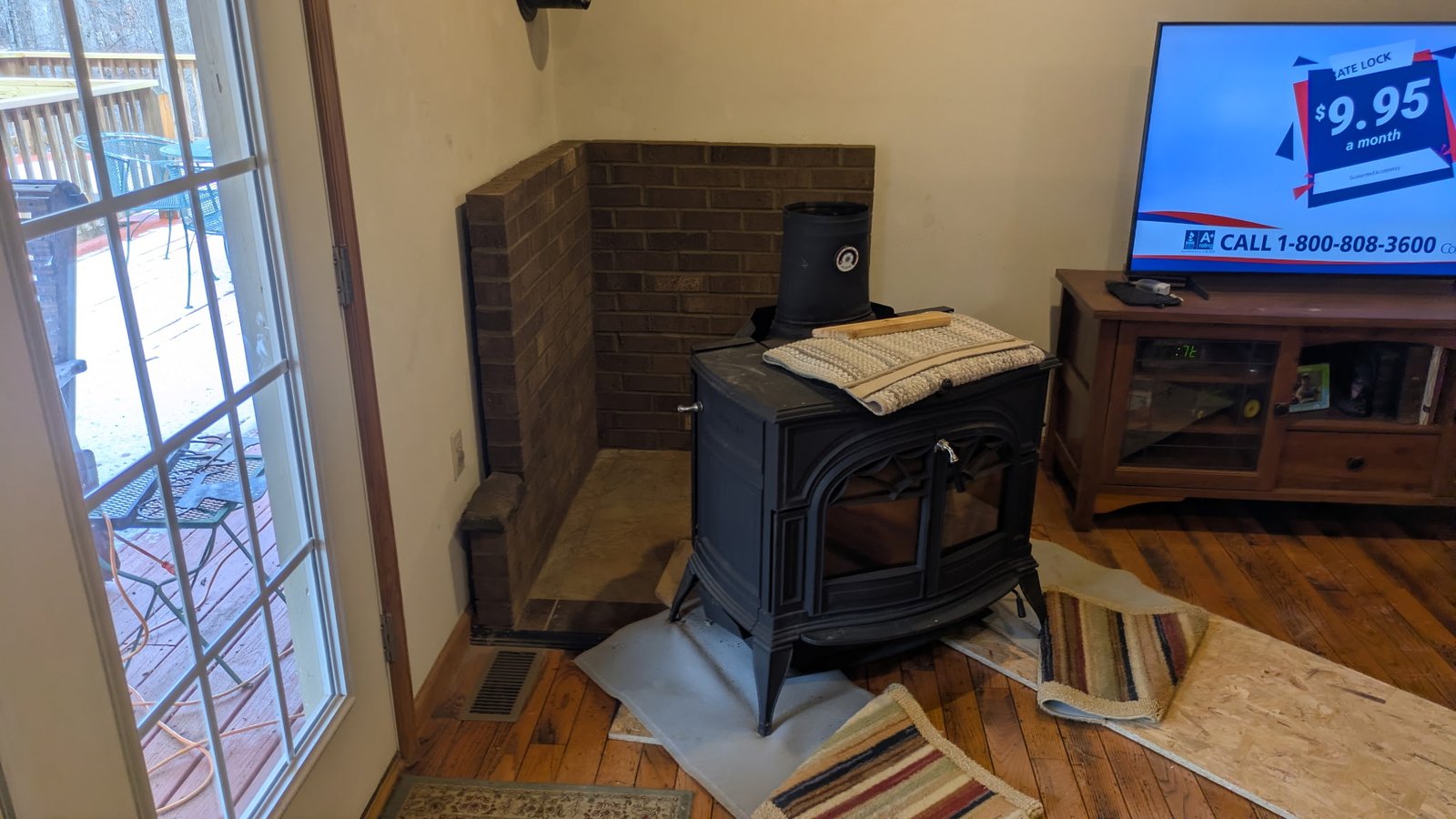
Custom brick hearth surround, freshly completed, with the wood stove set in place for fit before final hookup. Glen Rock, PA.
L
LBE Masonry Team
Licensed Masonry Contractors, York County PA
A wood stove deserves a backdrop that looks like it was built for it, not bolted onto a plain wall. This is exactly the kind of interior detail work we like taking on, where the homeowner has a clear vision and we get to build the thing that makes it real.
A new wood stove had just been delivered to this Glen Rock home, sitting in front of a plain stone hearth base that did the job but did not do it justice. The homeowner had already picked out the brick. What they needed was someone to build the wall around the stove that would make the whole corner feel intentional.
This was a custom decorative brick surround built over an existing stone hearth foundation in a Glen Rock living room. The stone base was already in place and structurally sound, sized correctly for the new stove and the required clearances. What was missing was the vertical backdrop, the brick wall that frames the stove, protects the surrounding wall surface, and gives the whole installation a finished, handcrafted look instead of a stove sitting in a corner with bare drywall behind it.
The homeowner had already selected the brick before we started, which made this a true collaboration. Our job was to take that material and build something with it that looked deliberate: clean lines, a bond pattern that suited the space, and proportions that matched the scale of the stove and the room around it.
They picked the brick because they had a vision for this corner of the room. We built it to make sure that vision actually showed up on the wall.
That collaboration is what makes a custom surround feel custom.Small but true detail: The photo here shows the stove sitting in place for a test fit right after the brickwork was finished, before the floor protection came up and before the stove was actually hooked up to the flue. There is always a brief, slightly anticlimactic moment on jobs like this where a brand new wall is finished and a brand new stove is sitting in front of it not doing anything yet. We promise it gets used eventually.
What We Built
This project involved building a full brick surround onto an existing stone hearth base, designed specifically to frame the new wood stove installation.
01
Layout Planning Around Client-Selected Brick
Before any brick went up, we worked out the layout against the dimensions of the corner and the stove itself. The homeowner had chosen the brick, so our job was figuring out how to lay it out to fit the space cleanly, with consistent coursing and a corner detail that looked intentional rather than improvised.
02
Building Over the Existing Stone Foundation
The stone hearth base was already in place and properly sized for the clearance requirements of the new stove. We built the new brick wall directly on top of and around this existing foundation rather than starting from scratch, which saved time and kept the part of the installation that was already correct.
03
Bond Pattern and Joint Consistency
Careful attention went into the bond pattern across the full height of the wall and into the corner transition. Consistent joint width and clean tooling throughout were what turned this from “a brick wall behind a stove” into a feature wall that holds its own visually in the room.
04
Fit Check with the Stove in Place
Once the masonry was finished, the stove was set into position to confirm fit, clearance and overall proportion before the final hookup and floor finishing were completed by others. This is the moment in the photo: brickwork finished, stove sitting in place, everything coming together.
Why a Wood Stove Deserves a Real Hearth Surround
A wood stove can technically sit in front of bare drywall as long as the clearance requirements are met. We see it done that way often enough. It works, but it never looks like it was meant to be there.
A proper brick or stone surround does two things at once. First, it provides additional heat protection and a non-combustible surface beyond what code minimums require, which matters for both safety and peace of mind around a wood-burning appliance. Second, and just as important to most homeowners, it gives the stove a visual home. The difference between a stove sitting in a corner and a stove framed by a built surround is the difference between an appliance and a feature.
Clearance requirements: The National Fire Protection Association (NFPA 211) governs clearance requirements for solid fuel appliances like wood stoves, including minimum distances to combustible walls and required hearth pad dimensions. These requirements vary based on the specific stove model and its listed clearances. We confirm the manufacturer specifications for the stove before finalizing the masonry layout on every wood stove surround project.
Working with Client-Selected Materials
This project came together because the homeowner had already chosen the brick before calling us. We get this request fairly often, and we like it. Here is how that process typically works.
Other Hearth and Stove Surround Work We Do
Custom surrounds for wood stoves and gas inserts come in a range of styles depending on the home and the homeowner’s vision.
Custom Hearth and Stove Surrounds Across York County
We build custom brick and stone hearth surrounds for wood stoves and gas inserts throughout Glen Rock and the rest of York County and Adams County. If you have a new stove on the way or an existing setup that does not match what it sits in front of, we would like to see what you have in mind.
📍 Glen Rock, PA
📍 York, PA
📍 Shrewsbury
📍 Hanover
📍 Spring Grove
📍 New Freedom
📍 Carroll Valley
📍 Adams County
Planning a Wood Stove or Hearth Project?
Whether you have already picked out materials or need help choosing, we will design and build a surround that fits your stove and your space.
Get a Free EstimateProject Details
Job Summary
Location
Glen Rock, PA (York County)
Work Done
Custom decorative brick hearth surround built over existing stone hearth foundation for new wood stove installation
Materials
Brick selected by homeowner, mortar color-matched on-site, existing stone hearth base
Services Provided
Interior brickwork, decorative masonry, hearth and stove surrounds, custom brick installation, residential masonry
Completed
Winter 2026