
Two brick repointing projects in York County, PA. Left: brick steps and patio after repointing. Right: before and after patio repoint with fan-pattern stone section.
L
LBE Masonry Team
Licensed Masonry Contractors, York County PA
Repointing is probably the most underrated thing we do. It is not glamorous. Nobody posts repointing photos at parties. But a properly repointed brick patio or step will outlast a new installation that was laid on a bad base with cheap mortar. We take the boring stuff seriously.
Both of these patios looked worse than they were. The brick was in good shape. The mortar was not. That is actually the best-case scenario on a job like this.
The projects you are looking at here are from two separate York County homes, both involving brick surfaces that had been installed well but had not been touched in years. Mortar joints that open up do not announce themselves. They just get a little wider each spring, a little more recessed each fall, until one day someone looks down and realizes the joints are essentially gone.
At that point the homeowner has two choices: repoint what is there, or let it keep deteriorating until the brick itself starts to shift and the scope becomes a full replacement. Repointing is the right call when the brick is still structurally sound. Both of these jobs were clear candidates.
Repointing is not exciting work to describe. But the before and after photos have a way of getting people’s attention.
Fresh white mortar joints on red brick in Pennsylvania sunlight. It just looks right.Honest admission: We get more calls about repointing in spring than any other time of year. People come outside after winter, look at their patio, and realize the mortar situation has gotten out of hand while they were not looking. Pennsylvania winters have a way of making decisions for you. We are available in April.
Project 1: Brick Patio and Steps
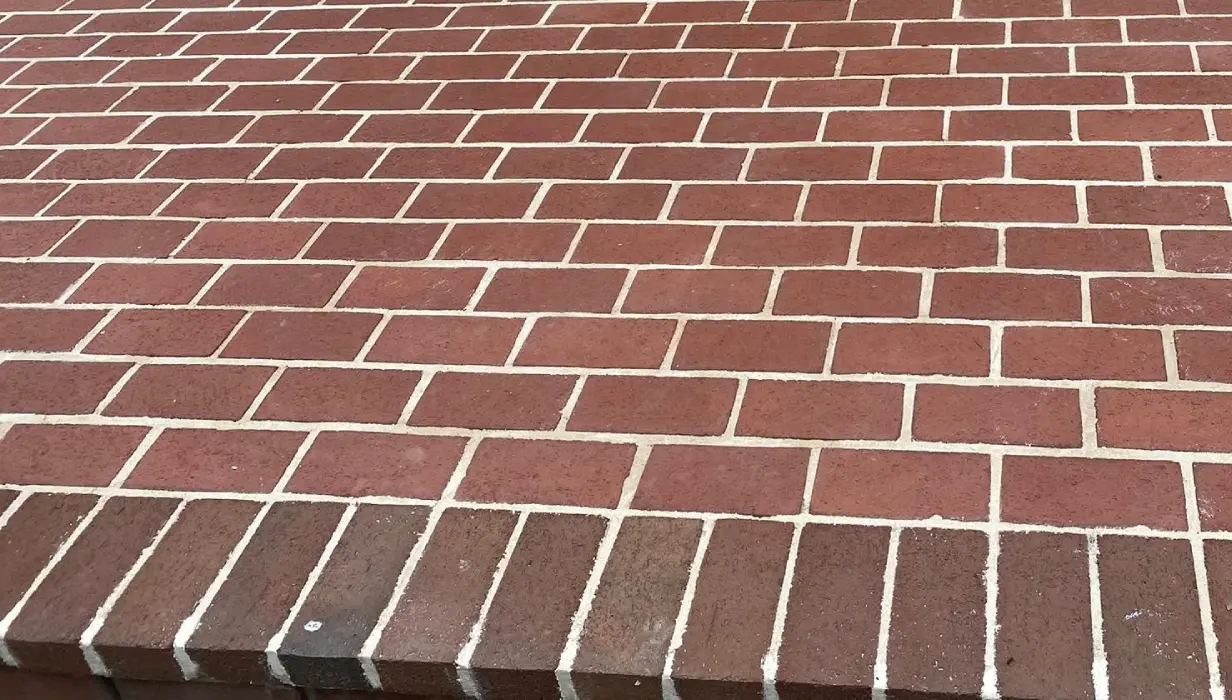
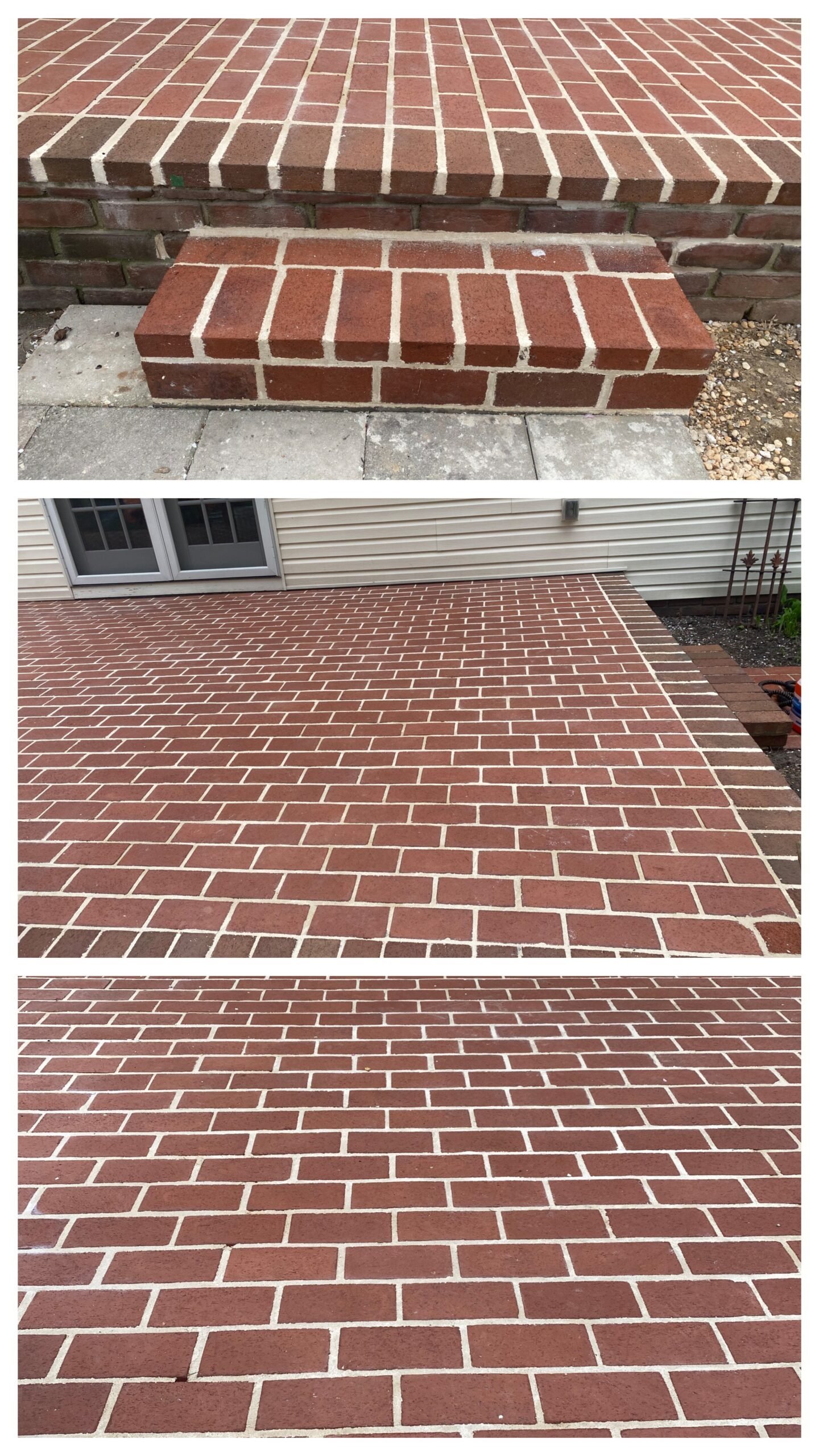
The first project involved a brick patio and matching front steps in York County. The brick was original to the home and still in excellent structural condition. The mortar joints throughout had deteriorated to the point where most were recessed significantly below the brick face and several had failed entirely, leaving open voids.
The steps are the part of this job that most people notice first in the photo. Three courses of brick, tight running bond, fresh white mortar joints. From the street it reads as new construction. It is not. The brick is original. Only the mortar is new.
01
Joint Grinding
All failed mortar was ground out to a minimum depth of 3/4 inch using an angle grinder with a mortar-raking blade. This is the step that determines whether the new mortar bonds properly. Pointing over existing failed mortar is a cosmetic fix that fails quickly.
02
Cleaning and Prep
Joints were cleaned of dust, loose particles and any organic growth before mortar was applied. A stiff brush and compressed air. The joint needs to be dry and clean for the new mortar to cure correctly.
03
Mortar Application
New mortar packed in layers to prevent shrinkage cracking. On joints deeper than 3/4 inch, a scratch coat goes in first and is allowed to firm up before the finish coat. The mortar color here is a white portland blend chosen to complement the red brick and match the original joint color.
04
Joint Tooling and Cleanup
Joints were tooled to a slightly concave profile while the mortar was still workable. Any mortar smeared on the brick face was cleaned off before it hardened. Final cleanup left the surfaces looking like the job was done by someone who cared what it looked like when they left.
Project 2: Brick Patio with Fan-Pattern Stone Section
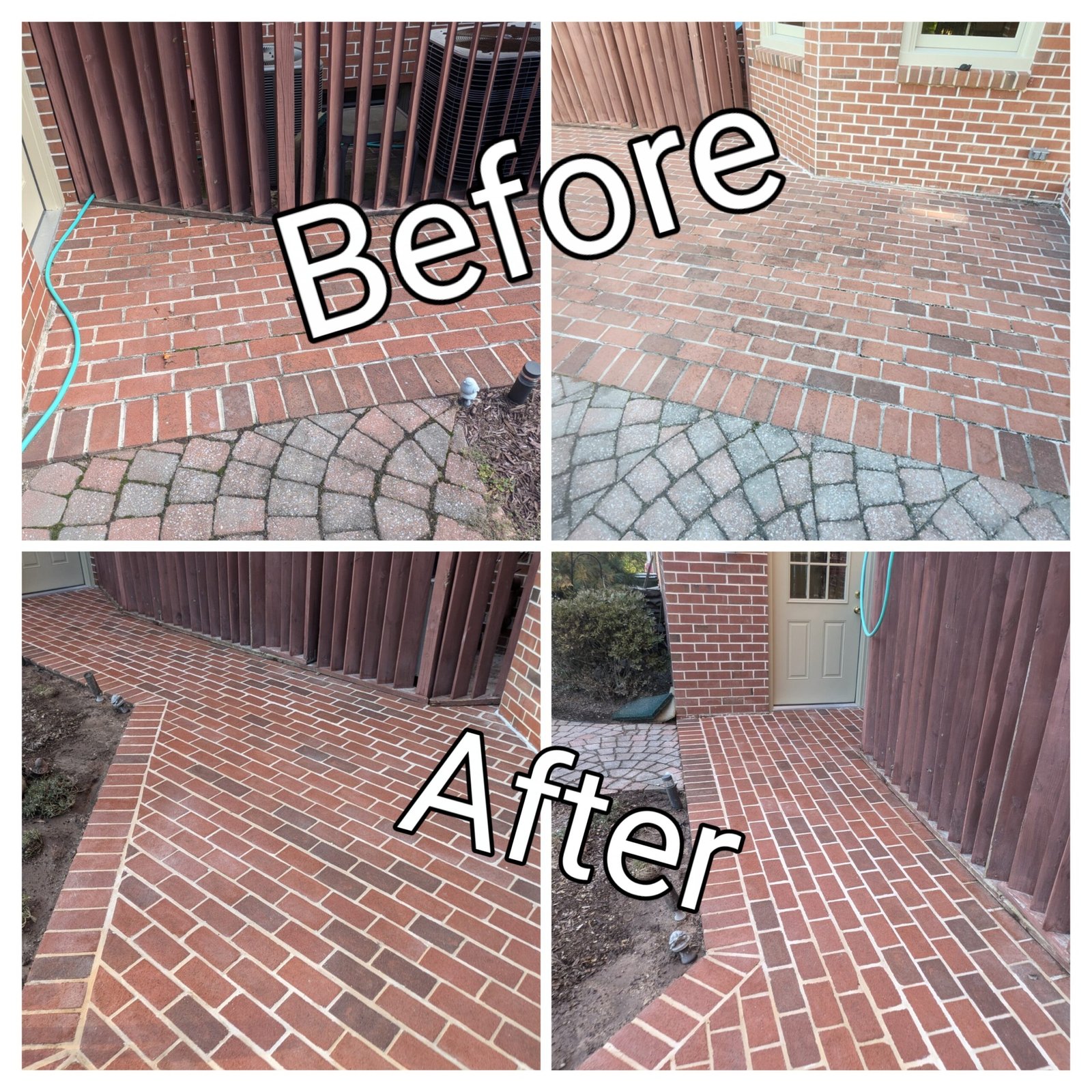
The second project is the before-and-after collage on the right side of the photos. This patio had two distinct surface types: the main field in standard running bond brick, and a fan-pattern stone section at the corner near the fence. Both surfaces needed repointing, and the approach was slightly different for each.
The brick field had the same deterioration pattern as the first project: recessed, crumbling joints throughout. The fan-pattern stone section had wider joints with more significant mortar loss, which is typical for that style of installation. The joints in fan-pattern work are tapered and irregular, which makes them more difficult to tool consistently but also means they hold more mortar depth when they are done correctly.
The after photos show the difference clearly. The running bond brick reads sharp and clean. The fan section joints are filled and tooled to match the character of the pattern without overworking them into something that looks overly formal.
Verified Google Review
★★★★★
I had been putting off this repointing job for two years because I thought it would be a huge project. LBE came out, looked at it, said it was straightforward, and finished it in one day. The patio looks absolutely new. I wish I had called sooner. Fair price and extremely clean work.
Repointing vs Tuckpointing: What Is the Actual Difference?
These terms get used interchangeably and the confusion is understandable. Here is the distinction that actually matters for most homeowners in York County.
Repointing is the process of removing deteriorated mortar from existing joints and replacing it with new mortar. This is what both of these projects involved. The brick stays in place, the failed mortar comes out, new mortar goes in. It is the standard maintenance repair for any brick surface.
Tuckpointing technically refers to a specific finishing technique where two contrasting mortar colors are used: a base mortar to fill the joint and a thin line of contrasting putty applied on top to create the visual impression of very fine joints. It originated in 18th century England and is still used in restoration work on historic masonry. In American usage, particularly in the Midwest, the term tuckpointing has come to be used loosely to mean repointing. Most contractors using the word tuckpointing in York County mean repointing.
When you call us about a brick patio or steps, we will tell you clearly what the work involves and what technique we are using. If you ask about tuckpointing or repointing, we understand what you mean either way.
Industry guidance: The Brick Industry Association Technical Note 7 on mortar for brick construction covers joint preparation, mortar selection, application technique and curing requirements for repointing work. The minimum joint depth of 3/4 inch before new mortar is applied is an industry-standard requirement, not a preference. Joints prepared less deeply than this have a high rate of early failure.
When Does a Brick Patio Need Repointing?
The short answer is: before the mortar fails completely. Here is how to read what you are looking at.
- Joints recessed more than 1/4 inch below the brick face Run your finger along a joint. If it goes in more than a pencil width, water is pooling in that joint every time it rains and freeze-thaw cycles are working on it every winter.
- Crumbling or powdery mortar If the mortar comes out when you scratch it with a key or fingernail, it has lost its binding strength. At this stage repointing is still straightforward. Wait another season and the brick will start to shift.
- Weeds or moss growing in the joints Organic growth in mortar joints is a sign that the joints are open enough to hold soil and moisture. The roots accelerate deterioration. This is a repointing job, not a landscaping job.
- White staining on the brick surface (efflorescence) Mineral deposits on the brick face mean water is moving through the masonry. The joints are the most likely entry point.
- Brick that shifts or rocks slightly underfoot If individual bricks move when you step on them, the mortar bed beneath has failed. This goes beyond repointing and into resetting, but catching it early limits the scope.
Best time to repoint in Pennsylvania: Mortar cures best between 40 and 90 degrees Fahrenheit. In York County that means late spring through early fall is the ideal window. Repointing in cold weather is possible with precautions but is more expensive and requires different materials. If you are planning this for your patio, spring estimates in March or April get you scheduled ahead of the summer rush.
Brick Repointing Across York County
We do brick patio repointing, step repointing and tuckpointing throughout York County and Adams County. If your brick surfaces are showing the signs above, give us a call or send a photo. We will tell you whether it is a repointing job, a reset job or something else entirely, and we will give you a straight number for the work.
📍 York, PA
📍 Shrewsbury
📍 Glen Rock
📍 Hanover
📍 Spring Grove
📍 New Freedom
📍 Carroll Valley
📍 Adams County
Brick Patio Looking Rough This Spring?
Send us a photo and we will tell you whether it needs repointing, resetting, or something else. One phone call, straight answer, no sales pitch.
Get a Free EstimateProject Details
Project 1: Brick Patio and Steps
Location
York County, PA
Work Done
Full repointing of brick patio and front entry steps, joint grinding, mortar packing and tooling, surface cleanup
Mortar
White portland-lime blend, matched to original joint color
Time on Site
1 day
Completed
Spring 2026
Project 2: Brick Patio with Fan-Pattern Stone Section
Location
York County, PA
Work Done
Repointing of running bond brick field and fan-pattern stone section, joint grinding, mortar application in two passes, tooling and cleanup
Mortar
Portland-lime blend, neutral gray tone matched to existing joints
Time on Site
1 day
Completed
Winter 2024