
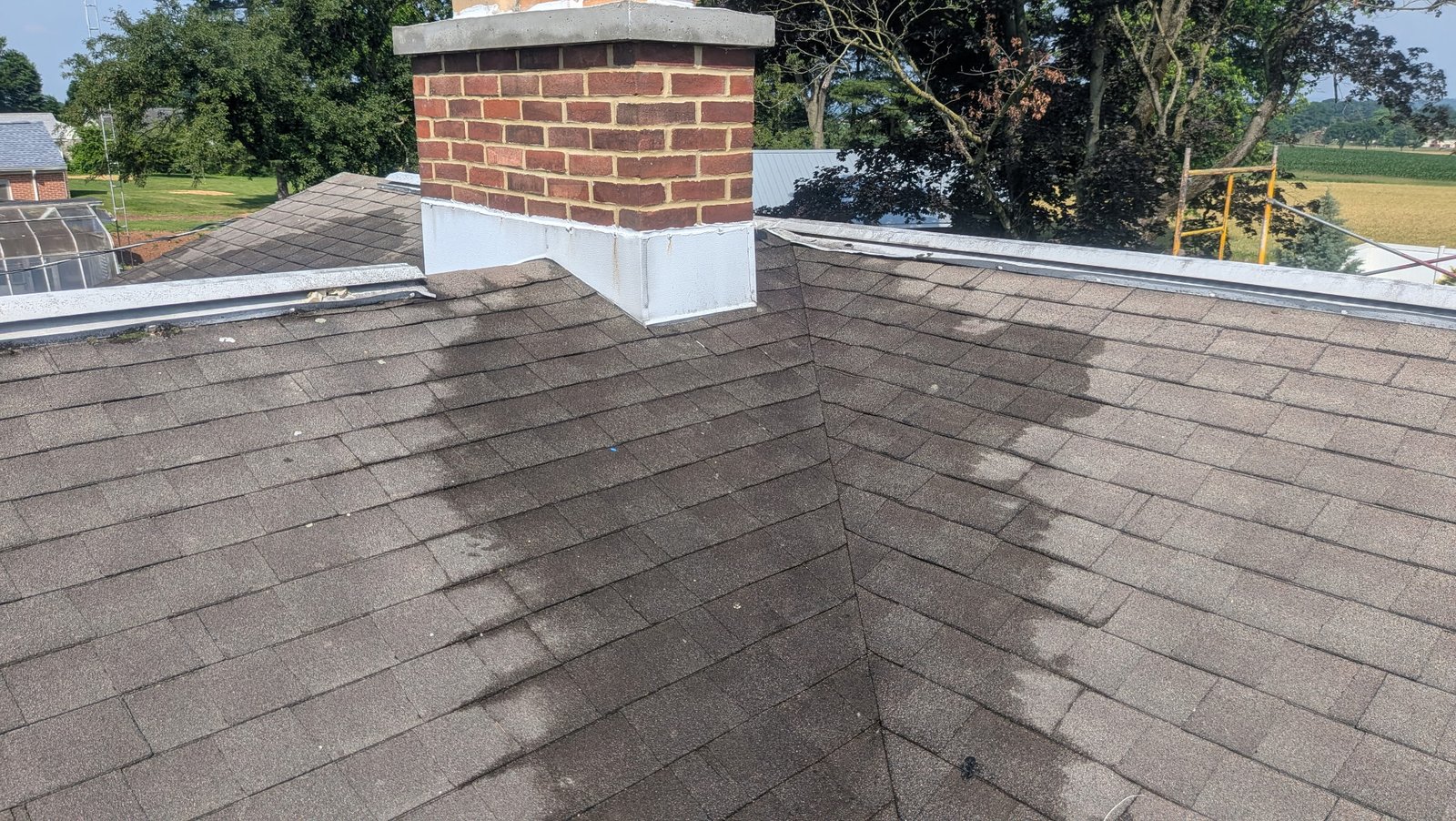
Before and after: deteriorated three-flue chimney fully rebuilt with new concrete crown, York PA.
L
LBE Masonry Team
Licensed Masonry Contractors, York County PA
When a chimney is too far gone to repointed, we tear it down to sound material and rebuild it right. Whenever the original brick can be saved, we save it. There is no reason to buy new brick when the old brick is still good, it just needs to be cleaned and reset.
By the time we got up there, the mortar joints were not just cracked. They had separated from the brick completely. You could see daylight through some of them. The crown was the kind of bad that makes you wonder how it lasted as long as it did.
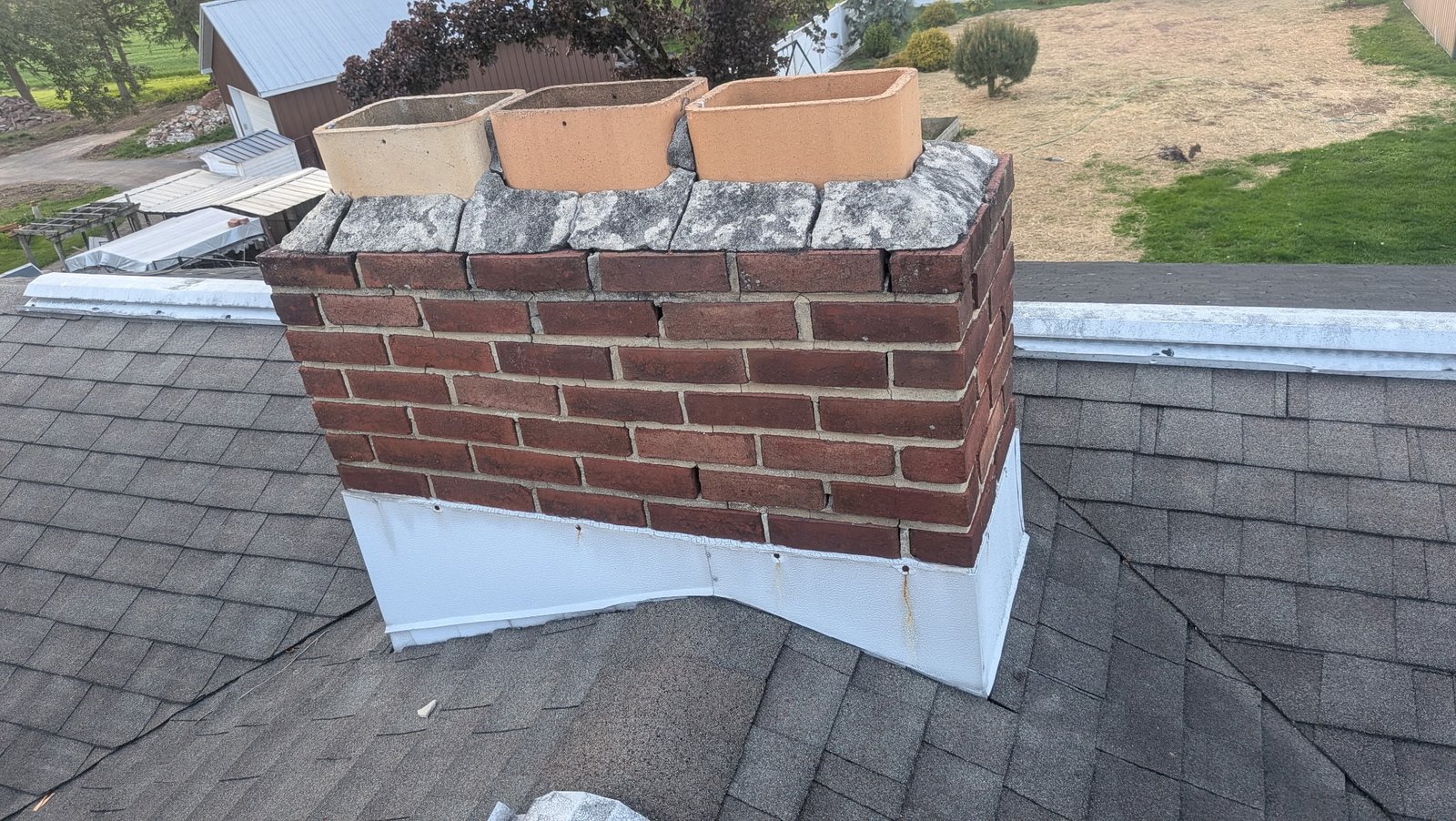
This chimney in York had three flue liners running side by side, serving multiple appliances in the house. The brick itself was in decent shape. The mortar holding it together was not. Years of Pennsylvania freeze-thaw cycles had worked the joints loose to the point where the wall was essentially just stacked brick with crumbling material between the courses. The crown on top, which is supposed to be the thing keeping water out of all of this, had failed completely.
At that point there is only one real option. You cannot repoint a chimney where the mortar has separated this badly. Repointing assumes the structure underneath is sound and you are just refreshing the joints. This was past that. The whole thing needed to come down.
We tore it down to the flashing. Once you are down to that level, you are looking at exactly what is holding the chimney to the roof and exactly what condition the brick is actually in.
That is the only way to know for certain what you are working with.Worth saying plainly: Tearing down someone’s chimney is always a slightly tense moment for the homeowner, even when they know it needs to happen. We get it. A chimney coming apart on your roof looks dramatic from the ground. We send photos as we go so nobody is standing in the yard wondering if their house is about to lose a major architectural feature permanently.
The Teardown and Rebuild, Step by Step
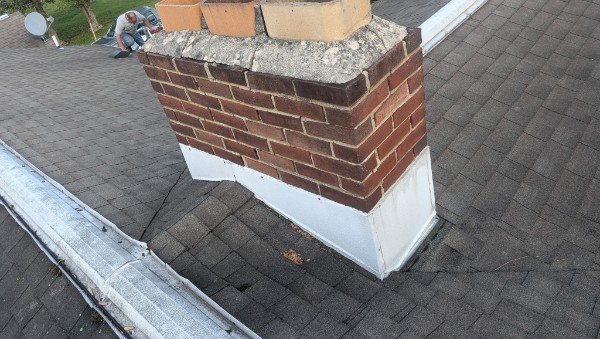
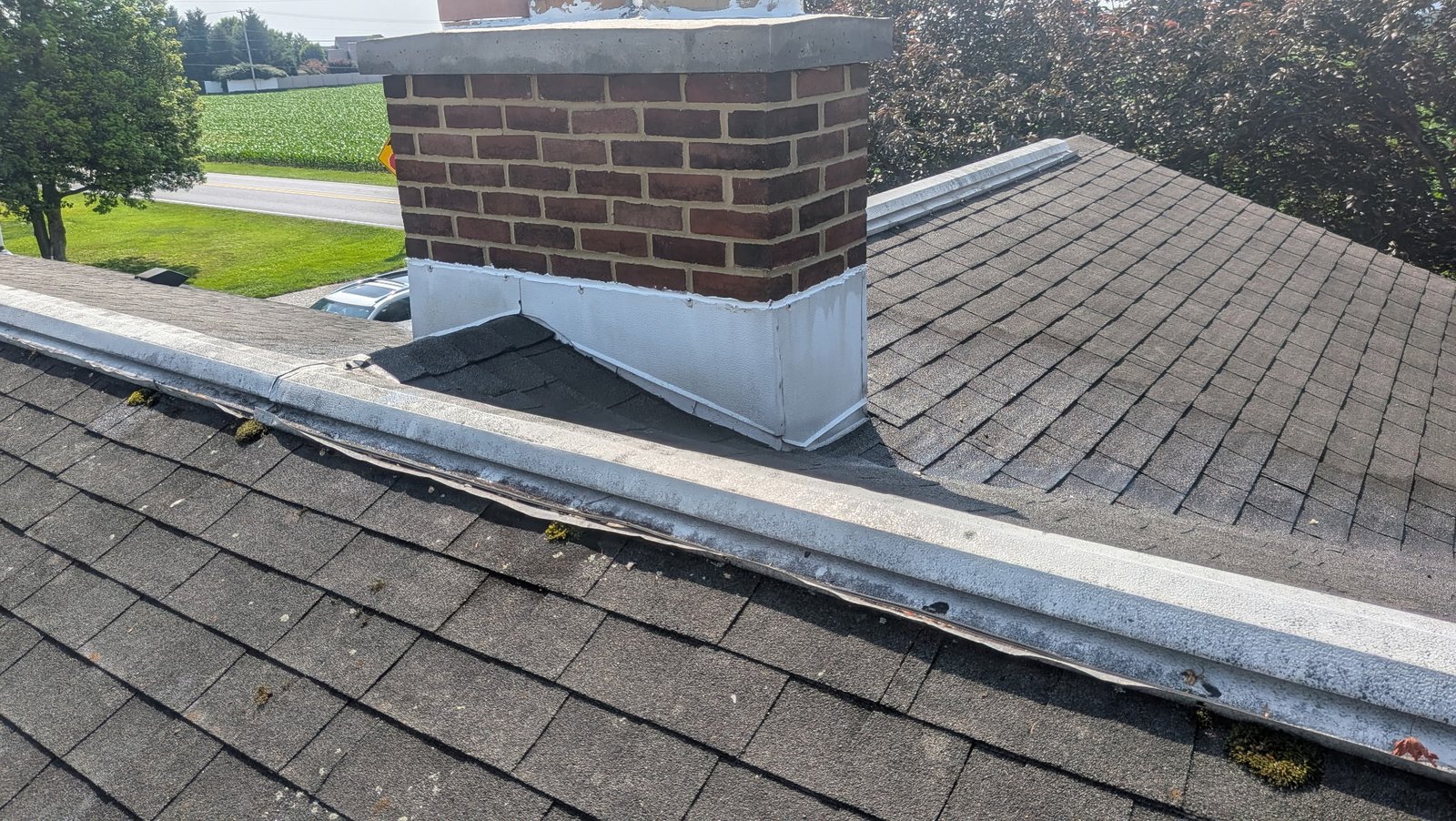
These photos follow the project from start to finish: the original chimney before any work began, the close-up condition that confirmed a full teardown was necessary, the structure stripped down to the flashing, the brick going back up around the three flue liners, and the finished chimney with its new concrete crown.
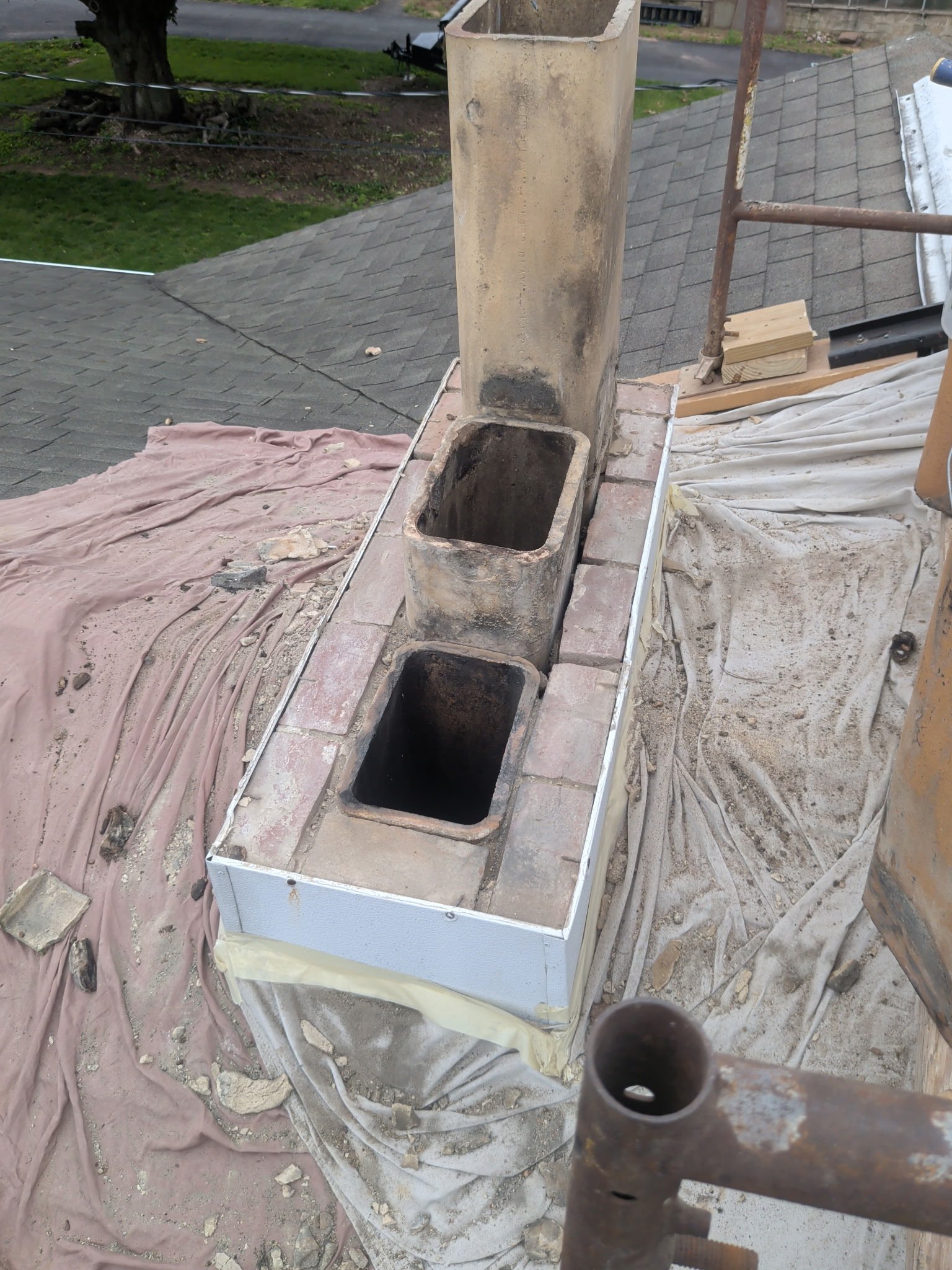
Left: the original chimney with three flue extensions, mortar joints visibly separating. Right: a closer look at the base condition that confirmed repointing alone would not be enough.
Left: torn down completely to the flashing, all three flue liners exposed. Right: salvaged brick rebuilt course by course back up to height.
The finished chimney: rebuilt brick, fresh mortar throughout, and a new poured concrete crown.
What This Rebuild Involved
This was a full teardown and rebuild, not a repair. Here is exactly what the project included from start to finish.
01
Full Teardown to the Flashing
We removed the chimney completely down to where the flashing meets the roof. This is the only way to fully assess the condition of the structure and start the rebuild from a clean, sound base. Anything less and you risk building new brick on top of a compromised foundation.
02
Brick Salvage and Cleaning
As we tore the chimney down, we set aside the brick that was still in good structural condition. Each salvaged brick was cleaned of old mortar before being set back into the new wall. This took longer than starting with new brick from a supplier, but it preserved the original color and texture of the chimney, which matters when you are rebuilding something that has to match the rest of the house.
03
Flue Liner Inspection
With three flue liners running through this chimney, we checked each one for cracks, gaps and proper height above the new crown before rebuilding around them. A flue liner in poor condition is a safety issue, not just a cosmetic one. All three liners here were in serviceable condition and were retained, then extended with new clay flue tile to bring them to the correct height above the new crown.
04
Full Rebuild with Fresh Mortar
The salvaged brick was reset course by course with new mortar throughout. None of the old failed mortar made it back into the wall. Every joint in the rebuilt chimney is new material, properly mixed and tooled, even though most of the brick itself is the same brick that was there before.
05
New 4-Inch Concrete Crown
Once the brick rebuild was complete, we formed and poured a new concrete crown, 4 inches thick, with a proper overhang and drip edge around all sides. The old crown was part of why this chimney failed in the first place. The new one is built to actually do its job for the next several decades.
Verified Google Review
★★★★★
I was nervous when they said the whole chimney needed to come down, but they explained exactly why and sent pictures throughout the whole process. The fact that they reused our original brick instead of just replacing everything with new material meant a lot to us. It looks exactly like our chimney always looked, just solid now instead of falling apart.
Repointing vs Full Teardown: How We Decide
This is the question every homeowner asks when we are standing on their roof looking at a deteriorated chimney. The answer comes down to one thing: is the mortar failing, or has the structure itself separated.
Repointing is the right call when
Mortar joints are cracked, recessed or crumbling but the brick courses are still tight and aligned. The structure is sound, the surface material needs renewal. This is the more common and less expensive repair.
Full teardown is required when
Mortar has separated from the brick entirely, courses are visibly shifting or leaning, or there is daylight visible through the joints. At this point the structure itself has failed and no amount of surface repointing will fix it.
This chimney was firmly in the second category. We do not recommend a full teardown unless it is genuinely necessary. It is more expensive and more disruptive than repointing, and we would rather repoint a chimney for a fair price than tear down something that did not need it. When we tell a homeowner their chimney needs to come down, it is because we looked closely and that is what the evidence showed.
Why We Salvage Original Brick When We Can
Tearing down a chimney does not mean throwing away the brick. On most rebuilds, especially on older homes, a significant portion of the original brick is still structurally sound. It just got pulled apart from failed mortar, not damaged itself.
Salvaging that brick takes more labor than buying new brick from a supplier. Each piece has to be cleaned of old mortar, usually by hand or with a chisel, and inspected for cracks before it goes back into the wall. Some pieces do not make the cut and get replaced with new matching brick. But when most of the original material can be reused, it is worth the extra time for a few real reasons.
- Color and texture match perfectly New brick almost never matches old brick exactly, even when you order the same style. Original brick that has aged in place has a patina that cannot be replicated. Reusing it means the rebuilt chimney looks like it was never touched.
- Lower material cost passed to the homeowner Buying an entire chimney’s worth of new brick is a real cost. When we can reuse what is already there, that savings goes back into the project instead of into a brick order.
- Less waste Good brick that still has decades of life left does not need to end up in a dumpster because the mortar around it failed.
Industry standard: The Brick Industry Association notes that fired clay brick, properly cleaned and free of structural cracks, can be reused indefinitely in new construction. The limiting factor on a teardown and rebuild is almost always the mortar and the supporting structure, not the brick itself. This is exactly what we found on this chimney.
Why the Concrete Crown Matters as Much as the Brick
A chimney can have perfect brickwork and still fail within a few years if the crown is wrong. The crown is the flat surface on top of the chimney, and its entire job is keeping water out of everything below it.
On this rebuild we poured a new crown 4 inches thick with a proper overhang past the brick face on all sides and a drip edge to direct water away from the chimney rather than down the face of it. This is the detail that separates a crown that lasts twenty years from one that cracks within five.
Common mistake we see on other chimneys: A crown poured flush with the brick, with no overhang, sends water straight down the chimney face every time it rains. That water finds its way into the mortar joints below and the deterioration cycle starts all over again, sometimes within just a few years. A correctly built crown with overhang and drip edge is not optional if you want the rebuild to actually last.
Chimney Rebuilds Across York County
We do full chimney teardowns and rebuilds, brick salvage and reuse, and concrete crown work throughout York County and Adams County. If your chimney has reached the point where the mortar has separated and repointing is not going to be enough, we will tell you honestly and explain exactly what a rebuild involves.
📍 York, PA
📍 Shrewsbury
📍 Glen Rock
📍 Hanover
📍 Spring Grove
📍 New Freedom
📍 Carroll Valley
📍 Adams County
Chimney Looking Rough? Get a Straight Answer.
Send us a photo from the ground or the roof and we will tell you whether you need repointing or a full rebuild. No upselling, just an honest assessment.
Get a Free Chimney EstimateProject Details
Job Summary
Location
York, PA (York County)
Work Done
Full chimney teardown to flashing, brick salvage and cleaning, flue liner inspection, full rebuild with fresh mortar, new 4-inch poured concrete crown
Materials
Salvaged original brick, portland-lime mortar, poured concrete crown with drip edge
Flue Configuration
Three flue liners, all inspected, retained and extended with new clay flue tile
Completed
Summer 2026