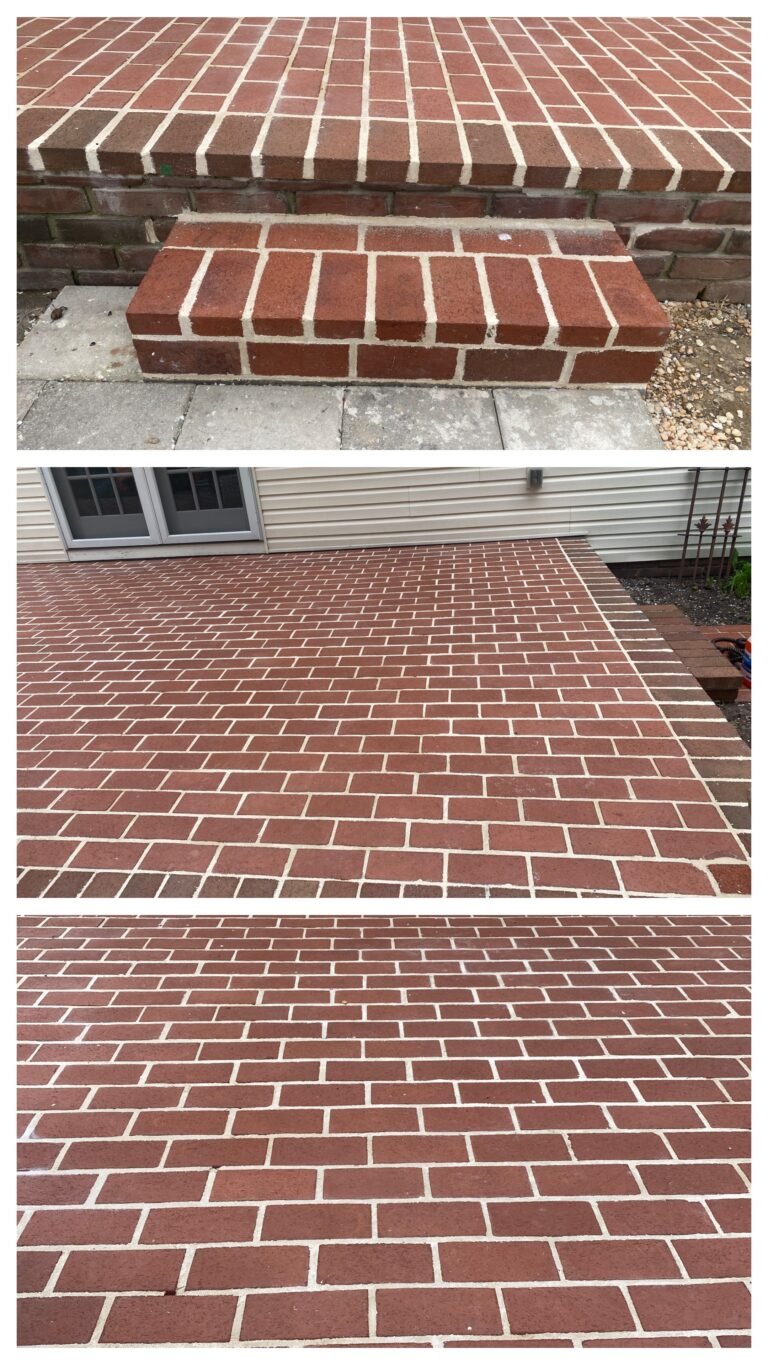
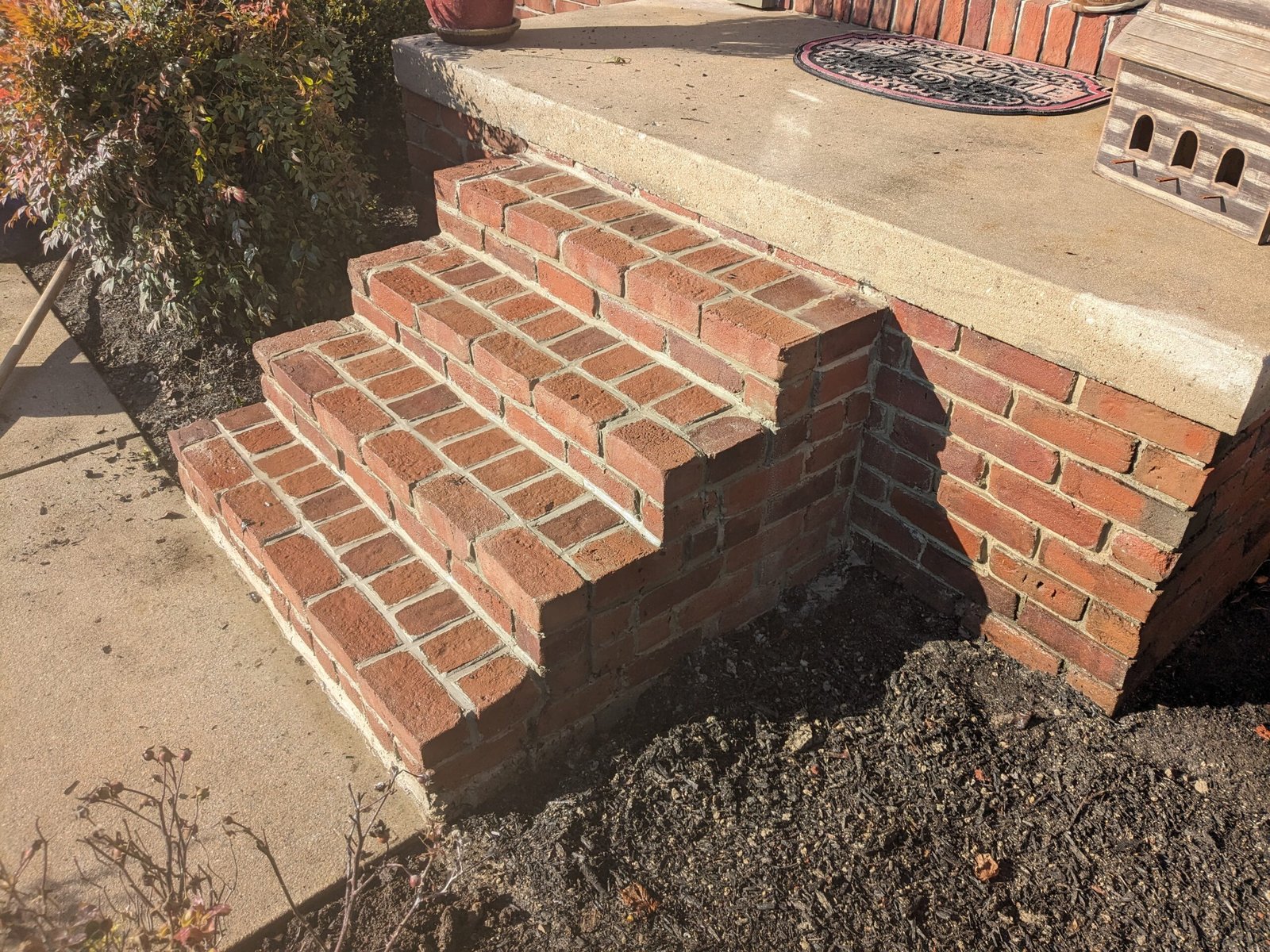

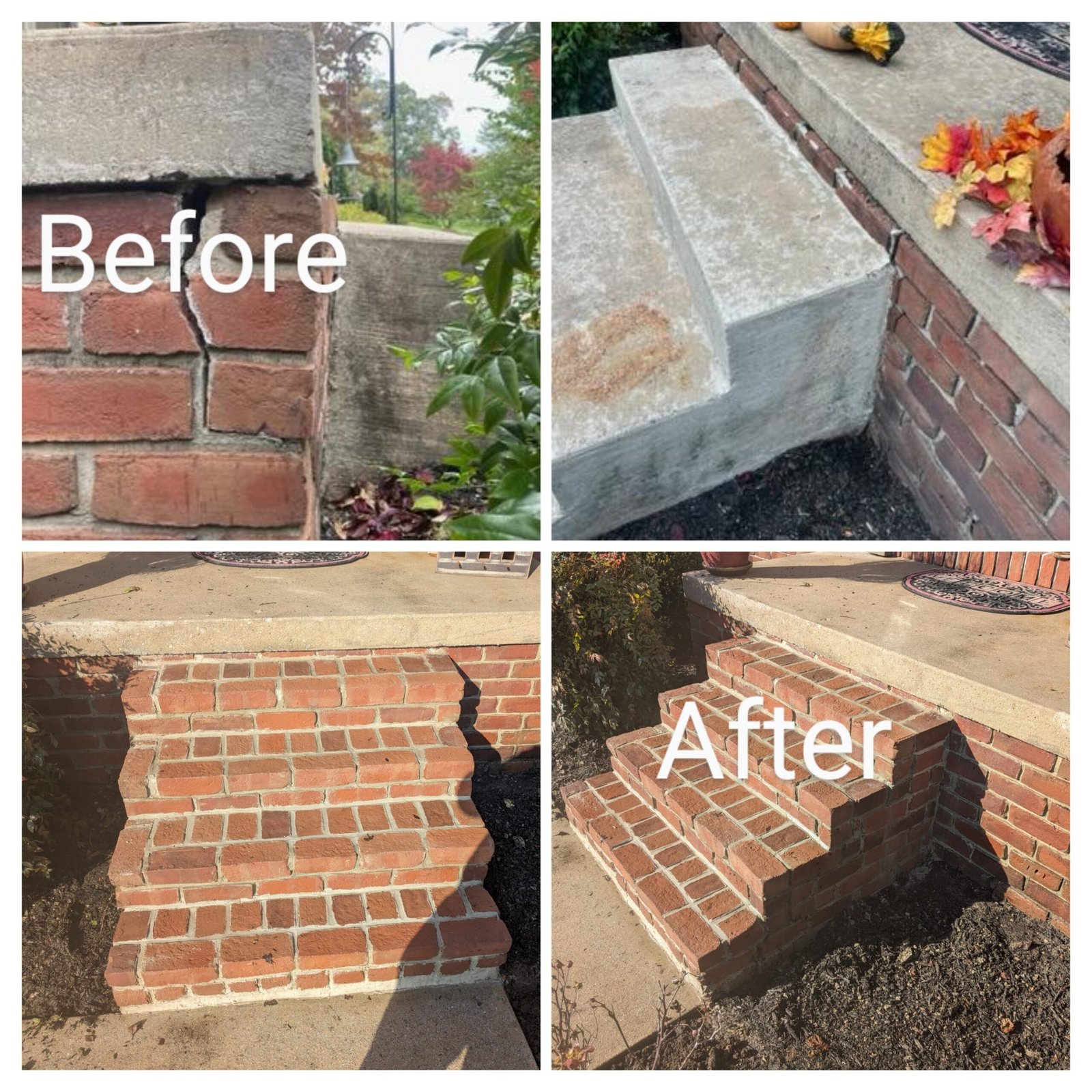
Before and after: Brick front steps repair with new concrete cap, York PA. Project completed Fall 2024.
L
LBE Masonry Team
Licensed Masonry Contractors, York County PA
We have been repairing brick steps, stoops and front entries across York County for years. Every job is done by our own crew. No subcontractors, no shortcuts. We show up when we say we will, and we charge what we quoted.
The cracks in these front steps had been getting wider for about ten years. The homeowner had been meaning to call someone. Then one fall morning she nearly tripped on a loose brick. That was the call we got.
Front entry steps are one of those things you walk past every single day and stop noticing. The crack gets a little wider each spring. The mortar joint goes from slightly recessed to noticeably hollow. The concrete cap on top starts lifting on one side. You tell yourself you will deal with it next season. Then someone nearly goes down on the way to get the mail.
That is how most of our brick step repair calls start in York County. Not with an emergency, exactly. More like a slow accumulation of “probably fine” turning into “okay, this needs to be fixed.”
This job in York was a full front steps rebuild. The original brick had been laid decades ago and done well. But the concrete cap on the top step had cracked clean through, water had been getting behind it for years, and several mortar joints in the face of the steps had opened up enough to see daylight through them. The structural integrity was still mostly there, which is why it had lasted this long. But “mostly” is not a word you want applied to your front steps.
She asked if we could just patch the cracks. We could. But we told her it would look patched, and she deserved better than that.
That is usually when homeowners decide to do it right.What We Found When We Got There
The before photos tell most of the story. The large crack running through the mortar joint on the left side of the steps had been working on that corner for years. Freeze-thaw cycles in York County are relentless. Water gets into a crack in October, freezes in November, expands, and opens the crack a little wider. Do that for ten winters and a surface crack becomes a structural gap.
The concrete cap on the top step was the bigger concern. It had a visible crack and had started to lift slightly on one end. When a cap lifts, it creates a perfect channel for water to pool and run directly into the brick beneath it. That is how you go from “front steps with a crack” to “front steps that need to be completely rebuilt from the ground up.” We have seen it many times.
Worth knowing: A cracked concrete cap on brick steps is not just cosmetic. Once water gets under the cap and into the brick below it, each freeze-thaw cycle works on the structure from the inside. Most homeowners do not realize how much damage is happening beneath the surface until the steps start moving visibly. Getting the cap replaced early is the cheapest version of this repair.
What We Did
This was a full strip-and-rebuild of the front entry steps, not a patch job. Here is exactly what the work involved.
01
Removed the Failed Concrete Cap
The cracked cap came off first. Once it was out we could see the extent of the water infiltration underneath, which confirmed the full rebuild was the right call.
02
Repointed All Open Mortar Joints
Every joint that had opened, recessed or crumbled was ground out and repointed with fresh mortar matched to the existing brick color. This is detail work. It takes longer than it looks.
03
Reset Any Shifted Brick
A few bricks near the base of the steps had shifted slightly over the years. We reset and relaid them properly before doing any surface work.
04
Poured a New Concrete Cap
New concrete cap on the top step with a slight pitch to shed water away from the front door instead of toward the brick. This is the detail that makes the difference long-term.
05
Full Cleanup and Inspection
We cleaned the whole area when we were done and walked through the finished work with the homeowner before leaving. No surprises, no “call us if you have questions.”
Total time on site: two days. The homeowner said the steps looked better than they had in twenty years. We believe it. Fresh mortar and a clean concrete cap make a dramatic difference in how a brick entry reads from the street.
The honest version of this story: she had been saying “I should call someone about those steps” for approximately three years. We are not judging. We have the same conversation with our own house projects every single weekend.
Verified Google Review
★★★★★
They came out, looked at everything, and gave me a straight price with no add-ons. The steps look incredible now. Clean work, professional crew, showed up exactly when they said they would. I have been recommending LBE to everyone on my street since they finished.
Why Brick Steps Crack in Pennsylvania
This is a question we answer on almost every estimate in York County. The short answer is: Pennsylvania winters are hard on masonry, and front entry steps take the worst of it.
Brick itself is remarkably durable. The brick in these steps was original to the house and still in good structural condition after decades. What fails is the mortar between the bricks and the concrete caps on top of them. Both are porous, both absorb water, and both go through the same freeze-thaw cycle every winter in York County.
The bigger issue with front entry steps specifically is that they are often the first place water collects on a property. Rain comes off the roof, runs down the driveway or walk, and pools at the front steps. If the cap on the top step is not pitching water away from the house, that water sits and works on the masonry joint beneath it every single time it rains.
Industry standard: The Brick Industry Association recommends a minimum 1/4 inch per foot of slope on all horizontal masonry surfaces including steps and caps. This is the pitch that keeps water moving away from the joint instead of into it. Most failed caps we see in York County have gone flat over time, or were never sloped correctly to begin with.
When to Repair Brick Steps vs When to Rebuild
This is the question we get on every single step repair estimate. Here is how we actually think about it.
If the brickwork is structurally sound and the mortar joints are the main issue, repointing is the right call. We go in, grind out the failed joints, repack with fresh mortar, and the steps are good for another twenty years. This is the most common repair we do on brick entry steps in York County and it is usually straightforward.
If the concrete cap has cracked or lifted, the cap needs to come off and be replaced. Full stop. Patching a cracked cap is cosmetic work, not structural. Water still gets under it.
If the brick has shifted, settled or if there is visible movement in the structure, that is a full rebuild conversation. In this case the original brick was still good so we were able to keep it, reset what had moved, and rebuild the whole surface. That is the best case scenario on a job like this.
For a deeper look at how we approach mortar repair and when tuckpointing makes sense versus a full rebuild, see our services page or check out our recent chimney rebuild project which goes into detail on masonry repair decisions.
5 Signs Your Brick Steps Need Attention Now
From the front walk, here is what to look for.
- Mortar joints that look hollow or recessed more than 1/4 inch Run your finger along the joint. If it goes in deeper than a pencil thickness, water is already getting in there every time it rains.
- A concrete cap that is cracked, lifted on one side, or has visible gaps at the edge This is the single most important thing to fix. Once the cap is compromised, every rainstorm is working on the brick beneath it.
- White staining on the brick face Efflorescence means water is moving through the masonry and carrying minerals to the surface as it evaporates. The stain is harmless. What is causing it is not.
- Brick that rocks or shifts when you step on it A brick that moves under foot is a brick that has lost its mortar bed. This is a trip hazard, and in Pennsylvania it is also a liability issue on a front entry.
- Visible cracks running through the mortar at corners or edges Corner cracks like the ones in our before photo are almost always the result of water infiltration over multiple seasons. They do not resolve on their own.
Liability note for York County homeowners: Pennsylvania property owners can be held liable for injuries that occur on their property due to known hazardous conditions. A loose brick or lifted step cap that has been visible for multiple seasons is exactly the kind of condition that creates exposure. This is not legal advice, but it is a real consideration that comes up when homeowners are weighing repair timing.
How Much Does Brick Step Repair Cost in Pennsylvania?
Here are honest ranges based on what we see in York County. Every job is different and we will not give you a real number without seeing it, but this gives you a sense of what to expect.
| Work Type | Typical Range | Notes |
|---|---|---|
| Repointing only (front steps) | $300 – $700 | Depends on number of steps and extent of joint failure |
| Concrete cap replacement | $400 – $900 | Per cap. Includes removal of old cap, new pour with correct pitch |
| Brick reset (shifted or loose brick) | $200 – $500 | Often combined with repointing on the same visit |
| Full step repair like this project | $800 – $2,000 | Repointing, cap replacement, brick reset, full rebuild of surface |
The Brick Industry Association technical guidelines on maintenance and repair are worth reading if you want to understand what good masonry repair actually looks like. We follow these standards on every job.
Where We Work
We do brick step repair, repointing and concrete cap work throughout York County and Adams County. If you are looking at your front steps right now and something does not look right, give us a call or send a photo.
📍 York, PA
📍 Shrewsbury
📍 Glen Rock
📍 Hanover
📍 Spring Grove
📍 New Freedom
📍 Carroll Valley
📍 Adams County
Not Sure What Your Steps Need?
Send us a photo from your phone and we will tell you exactly what is going on and what it will cost to fix it. Straight answer, no pressure.
Get a Free EstimateProject Details
Job Summary
Location
York, PA (York County)
Work Done
Full brick steps repair: concrete cap removal and replacement, full repointing of all mortar joints, brick reset, surface cleanup
Materials
Portland-lime mortar matched to original brick color, poured concrete cap with positive drainage pitch
Time on Site
2 days
Completed
Fall 2024
Permit Required
No (repair and repointing work)