
Paver Patio
Paver Patio Installation in York PA
A good patio changes how you use your backyard. We install paver, brick, and flagstone patios across York County and Adams County. Properly graded, properly edged, built on a base that holds its shape through Pennsylvania winters instead of popping up in the spring.
20-30
Year lifespan, done right
2
Counties served
PA-Rated
Freeze-thaw base
Free
On-site estimates
Why It Matters
A patio is not a paver problem. It is a base problem.
Most patio failures we get called to fix have nothing to do with the pavers. The pavers are usually fine. What failed is what is underneath them. Settled base, missing edge restraints, no drainage slope, wrong gravel. By the third winter the patio looks like the surface of a bad parking lot.
The patio you actually want is built from the ground up. Six to eight inches of compacted aggregate base, properly graded for runoff, contained on the edges so the pavers cannot drift. The pavers themselves are the easy part. We get the base right, and the patio you put in this year will still look the same in twenty.
When to Call Us
Signs you are ready for a new patio
Not every backyard needs a patio. But if any of these sound familiar, you have probably already been thinking about it.
Grass that never grows in one spot
If there is a worn dirt patch where the grill, the table, or the fire pit lives, that area has already become your patio. It is just not finished yet.
An old patio that is failing
Sunken pavers, weeds in the joints, edges drifting outward, cracks in the concrete. Most failed patios can be replaced with something that lasts decades, not seasons.
A deck you do not want to maintain
Wood decks need staining, sealing, and replacement boards. A paver patio at the same square footage costs about the same to install and zero to maintain for the next 25 years.
Mud after every rain
If the back door area turns into a mud pit every time it rains, a properly graded patio with drainage solves it permanently. No more taking shoes off at the threshold.
You want to entertain outside
Patio seating for six to eight people takes about 200 to 300 square feet. With a fire pit or grill, plan on 350 to 500. We help you size it right based on how you actually want to use it.
You are landscaping the backyard anyway
If you are already planning a fence, garden, or new plantings, the patio should be part of that conversation. Doing it together is cheaper and looks better than doing it in pieces.
Patio Types


Pavers, flagstone, or brick. What works for your yard.
Three main material choices, each with different costs, looks, and lifespans. Here is how to think about which one fits your project.
Most popular choice
Concrete Pavers
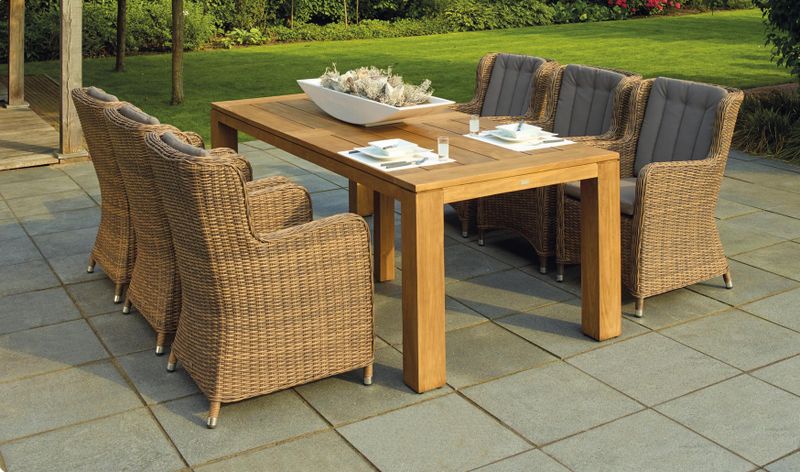
Engineered modular pavers (Belgard, Techo-Bloc, Cambridge, EP Henry). Predictable cost per square foot, hundreds of color and pattern options, and individual pavers can be lifted and reset if you ever need to access utilities underneath. The default choice for most York County patios because it offers the best balance of cost, durability, and look.
Most natural look
Flagstone & Natural Stone
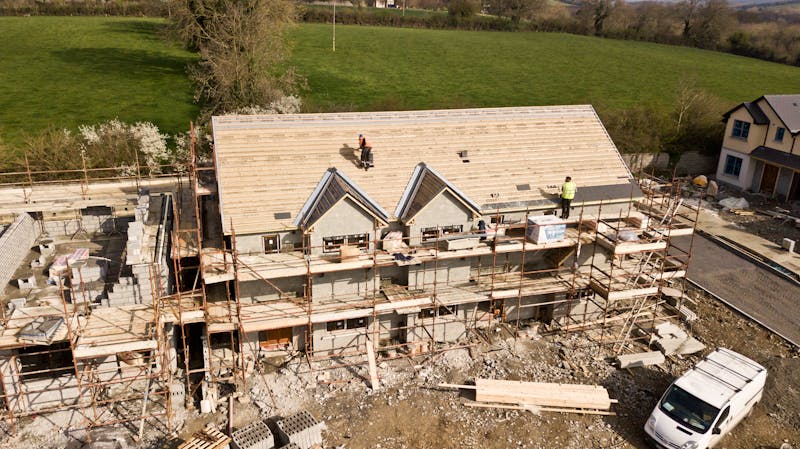
PA bluestone, irregular flagstone, or cut stone laid on a sand or mortar base. Every piece is unique, the color shifts with the weather, and it ages into the landscape in a way concrete pavers cannot match. Costs more per square foot than pavers but lasts indefinitely with basic maintenance.
Best for older homes
Clay Brick Patios
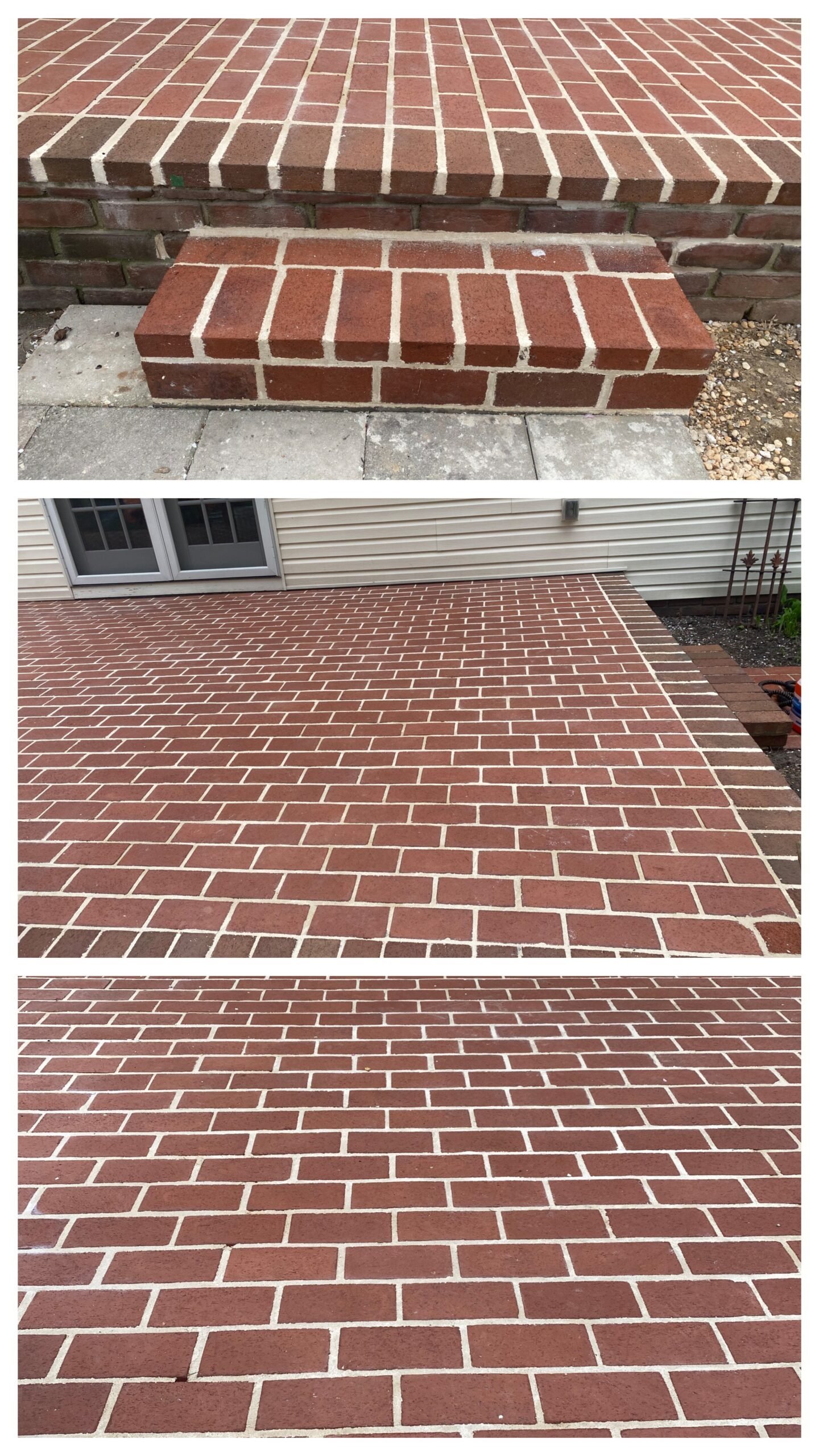
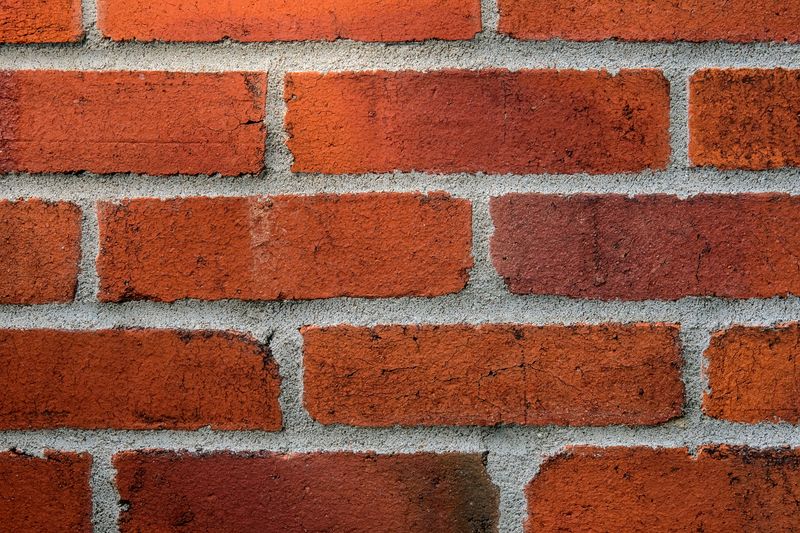
Real clay brick, not concrete pavers made to look like brick. The right choice when the rest of your property is brick, especially older York and Hanover homes where matching the existing material matters. Classic herringbone or basket-weave patterns. Installs slower than pavers, lasts essentially forever.
How We Build
The seven steps that decide whether your patio lasts
A patio that fails skipped one of these steps. Usually the base. Sometimes the edge. Almost never the pavers themselves.
01
Layout & site assessment
We mark out the patio shape, check the slope of the existing yard, and figure out where water needs to go. Drainage is decided here, before anything else happens. Get this wrong and the rest does not matter.
02
Excavation to proper depth
We dig out 8 to 12 inches below finished grade, depending on the patio type and the soil. Most failed patios in York County were excavated 3 to 4 inches deep. That is not a base, that is a placeholder.
03
Geotextile fabric
A layer of woven fabric between the soil and the base aggregate. Stops the soil and the gravel from mixing over time, which is one of the main reasons patios settle unevenly after five or ten years.
04
Compacted base in lifts
Crushed stone aggregate (2A modified) installed in 2-inch lifts and compacted with a plate compactor between each lift. This is where 70% of the work happens. A properly compacted base is the difference between a patio that lasts 5 years and one that lasts 30.
05
Bedding sand & screeding
One inch of clean concrete sand, screeded perfectly level. The pavers sit directly on this. Too thick and they sink unevenly. Too thin and they cannot be set true. One inch, every time.
06
Pavers, edge restraint, polymeric sand
Pavers laid in your chosen pattern, cut precisely on the edges, restrained with paver edging spiked into the base. Joints filled with polymeric sand, swept clean, then misted to activate. The polymeric sand locks the joints and stops weed growth and ant tunneling.
07
Final compaction & cleanup
One last pass with the compactor (with a protective pad) to seat everything together, sweep, and walkthrough. We restore disturbed grass, clean off the new patio, and you are ready to use it that day.
The patios we get called in to replace usually had nothing wrong with the pavers. The base was three inches of gravel and hope. That is not a patio, that is a countdown.
LBE Masonry Crew
While We Are There
Things worth adding while the patio is going in
If we are already excavating, grading, and bringing in stone, the marginal cost of adding these features is much lower than installing them as a separate project later. Worth thinking about during the planning conversation.
Fire pit. Built-in stone or paver fire pit, wood-burning or gas-piped. The most-used feature on most of the patios we install. Adds 20 to 50 square feet of patio area around it.
Seating wall. A low stone or paver wall around part of the patio, capped flat to act as built-in seating. Adds permanent seats for six to ten people without any furniture in the way.
Stone steps. If your patio sits at a different elevation from the house or the yard, real stone steps tie everything together. Better than wood steps, lower-maintenance than poured concrete steps.
Walkway tie-in. A matching paver or stone walkway from the patio to the driveway, the gate, or the front of the house. Looks intentional, costs much less when done at the same time as the patio.
Lighting. Conduit run for low-voltage path lights, post caps, or wall lights. Easy to install when the patio is open, expensive to add later when it is finished.
Where We Work
Patio installation across York County and Adams County PA
We install patios throughout the region. Spring and early summer book up the fastest. If you want a finished patio by July, the conversation should happen by March.
York
Hanover
Shrewsbury
Glen Rock
Spring Grove
New Freedom
Stewartstown
Red Lion
Dallastown
Dover
Wrightsville
Carroll Valley
Fairfield
Gettysburg
Common Questions
What homeowners ask before they hire us
Most paver patios in York County run $14 to $22 per square foot installed, including base, sand, pavers, edge restraint, and polymeric sand. A standard 280 square foot patio typically falls in the $4,000 to $6,500 range. Flagstone runs higher, $20 to $35 per square foot. Brick patios depend heavily on the brick we source. Add-ons like fire pits, seating walls, or steps are quoted separately. We give itemized estimates after seeing the site.
A properly built paver patio in PA easily lasts 25 to 30 years, often longer. The pavers themselves last essentially forever (50+ years) but the base, edge restraint, and joint sand may need touch-up over the decades. Patios that fail in 5 to 10 years almost always had inadequate base preparation. Build it right once, and you stop thinking about it.
Most paver patios do not need a permit because they are not considered permanent structures. Some townships require a permit if the patio is over a certain square footage, attached to the house, or includes structural features like a roof or large retaining walls. We check with your township before starting and pull permits when required.
Spring through fall is ideal. We can install into early winter as long as the ground is not frozen. Spring and early summer book up first, so if you want a patio by Memorial Day or July 4th, plan on starting the conversation by February. Late fall installs (October-November) often have shorter lead times if you can wait to use it until spring.
Pavers cost more upfront but typically deliver better long-term value. Pavers can be lifted and reset if you ever need to access utilities underneath, individual pavers can be replaced if damaged, and they handle freeze-thaw better than monolithic concrete. Concrete patios are cheaper initially but crack over time and are harder to repair invisibly. For Pennsylvania climates, pavers are usually the better long-term choice unless budget is the deciding factor.
Not when the joints are filled with polymeric sand and the patio is built on a proper base. Polymeric sand hardens with water and locks the joints, blocking both weed growth and ant tunneling. Most weeds in older patios come from organic debris (leaves, dust) accumulating on the surface and seeds germinating in that layer, not from below. Sweeping the patio occasionally is enough maintenance to keep it weed-free for decades.
Optional but worth considering. Sealing protects against staining (especially from food, drinks, and grease near grills), enhances the color, and extends the life of the polymeric sand in the joints. We typically recommend sealing one to two years after installation, then re-sealing every three to five years. Some homeowners prefer the natural weathered look and skip sealing entirely. Both are valid choices.
Ready to Stop Looking at That Worn Patch in the Backyard?
Send us a few photos of where the patio would go and roughly how big you are thinking. We will give you a straight estimate, an honest read on what your site needs, and a realistic timeline.
Get a Free Estimate